
Minecraft Bedroom Workshop Map Guide
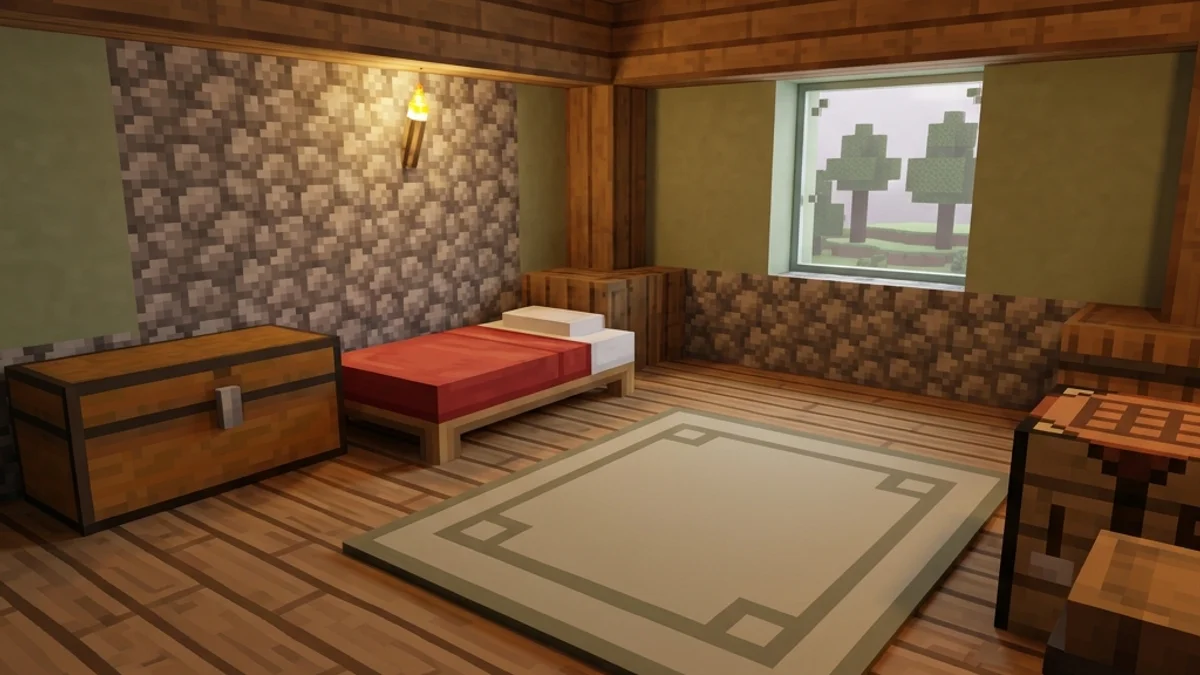
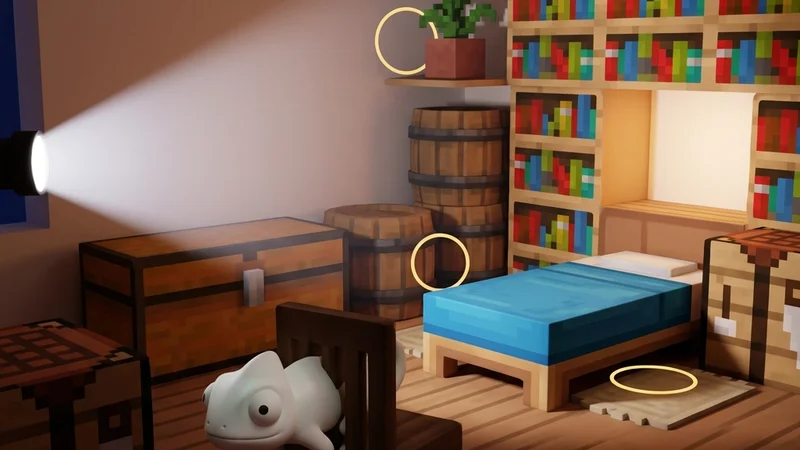
The Minecraft Bedroom Workshop map is a small-sized, pixel-art-themed level for Meccha Chameleon. The environment recreates a blocky bedroom scene with pixelated furniture, a bed, bookshelves, chests, and a crafting table. The low-poly aesthetic and repeating grid textures make it an ideal map for pattern-matching camouflage on portable hardware.
This guide provides a comprehensive breakdown of the map’s layout, hiding strategies, and seeker counter-tactics.
Map Overview & Layout Analysis
The Minecraft Bedroom is a compact, single-room map with distinct zones:
                    MINECRAFT BEDROOM LAYOUT

        +-------------------------------------------+
        |              [Pixel Window]                |
        |            (Grid Frame Pattern)            |
        +--------+------------------+---------------+
        |        |                  |               |
  [Bookshelf |   [Bed Area]    [Crafting     [Chest Row]
   Blocks]   | (Quilt Pattern)  Table]       (Dark Wood)
        |        |                  |               |
        +--------+------------------+---------------+
        |              [Floor Grid]                  |
        |           (Repeating Tile Pattern)         |
+-------------------------------------------+- Bed Area: A large pixelated bed with a quilt pattern. The blocky headboard and pillow shapes create hiding opportunities.
- Bookshelf Blocks: Tall, repeating pixel book spines arranged in a grid pattern. Excellent for pattern matching.
- Crafting Table: A detailed workstation with tools and items on top. Complex geometry breaks silhouettes.
- Chest Row: Dark wooden chests along the wall. Shadows between chests offer tight hiding spots.
- Pixel Window: A large window with a blocky frame. The grid pattern of the window panes provides strong camouflage alignment.
Detailed Hider Strategies
1. Pixel Grid Wall Alignment
The blocky wall textures create a natural grid for camouflage.
- Positioning: Stand flush against a wall, aligning your body with the pixel grid lines.
- Painting: Paint square patches on your body matching the wall’s pixel color grid. Use the fine brush to create clean, blocky edges.
- Pose: Use the standing pose to match the wall height. The Curl pose works for lower sections.
- Reflectivity: Set roughness to
0.5to match the flat, matte pixel aesthetic. - For paint technique tips, see the Painting Basics Guide.
2. Bookshelf Block Blending
The repeating pixel book spines are ideal for pattern matching.
- Positioning: Stand in front of a bookshelf block, aligning your torso with a column of book spines.
- Painting: Paint vertical stripes matching the book spine colors (typically red, blue, green, and yellow pixel blocks).
- Result: Seekers scanning the bookshelf will see you as part of the repeating pattern.
3. Under-Bed Shadow Camping
The space under the pixel bed is naturally dark.
- Positioning: Crouch under the bed, positioning yourself behind the bed legs.
- Painting: Use near-black to match the shadow depth under the bed frame.
- Result: Without a direct flashlight angle, seekers will overlook the dark space entirely.
4. Crafting Table Tool Mimicry
The crafting table is decorated with blocky, pixel-art tools like axes, pickaxes, and hammers.
- Positioning: Stand directly adjacent to the crafting table side.
- Painting: Paint your lower body matching the dark oak wood base of the table, and paint your upper body in geometric grey and brown pixel designs to simulate an axe head or hammer handle resting on the edge.
- Result: Seekers sweeping the tool-laden workspace will visually integrate your model as part of the crafting table clutter.
Seeker Counters
1. Pixel Pattern Disruption Scans
Hiders relying on pixel grid matching will have slightly misaligned patterns.
- Action: Walk along the walls slowly, checking each pixel column for inconsistencies.
- Detection: Look for characters whose pixel patches don’t perfectly match the wall grid’s color sequence or spacing.
2. Furniture Edge Checks
The blocky furniture creates sharp, geometric edges that hiders can hide behind.
- Action: Check behind the crafting table, chest row, and bed headboard by shining your flashlight at the floor behind each piece.
- Detection: Shadows cast by hiders behind furniture will appear as extra geometric shapes on the floor.
3. Physical Collision sweeps under the Bed
The low clearance beneath the bed frame is a major hiding hub.
- Action: Sweep your character’s physical model directly through the under-bed clearance, or fire a test shot into the dark recess.
- Detection: Since hiders cannot turn off their physical collision box, running into the bed gap will block your path if someone is hiding there.
- For hardware configuration tips, see the Steam Deck Hider Tips page.
Platform Compatibility & Performance (CVL)
- Steam Deck: Rated Stable. The small map size and simple geometry keep frame rates locked at 40+ FPS. Ideal for portable play.
- Mac CrossOver: Rated Unstable. Custom pixel shader effects may trigger crashes. Not recommended.
- Check the full Minecraft Bedroom Compatibility details.